by Cathy Fletcher
The taboo surrounding gut health has been lifted in the past couple of years, with all generations seemingly taking a renewed interest in the best ways to care for their digestive systems. Upon reflection, this may well be in response to the saturation of processed foods littering the market; our guts have done their time.
We all want to be healthier and eat better, sure. But, for a lot of people, that isn’t always easy. One of the best ways to stack the deck in your favour is to make sure you start the day off on the right foot. So let’s break down the gut-friendliest way to kick-start your day.
Sleep
To promote the best possible gut health, you should always aim to have a good night’s sleep. If you want to look after your health at all, sleep is essential. But it is critical for digestion because, during periods of deep sleep, your body regulates hormones that control your metabolism and appetite. If you’re having a tough time getting to bed on time, these hormones can become unbalanced, which can lead some people to crave fatty and sugary foods.
Furthermore, if you have a full eight hours, you’re giving your body time to perform several restorative functions. Just like you, your gut microbes have their own circadian rhythms, which help keep your microbiome well-populated and diverse. Irregular sleep patterns can disrupt these rhythms and reduce the number of beneficial microbes in your gut while increasing the number of harmful ones. This imbalance is known as dysbiosis and can also cause gastrointestinal inflammation – something we’d all prefer to avoid.
Stretches (Or Yoga)
Once you’re awake, the first thing on the to-do list is a couple of stretches. These short exercises aren’t remotely taxing and are designed to support the gastrointestinal tract.
I’d first like to recommend a forward fold pose, which is designed to support with wind relief. If you lie on your back and raise your knees to your chest, you should be able to wrap your arms around your knees, pulling your thighs against your stomach. This stretch compresses your digestive system while promoting circulation, and should help get things moving at the start of the day.
The second stretch is a straightforward hamstring stretch. Stand up straight, then reach down for your toes, either without bending your knees or as little as possible. Hold it for as long as feels comfortable. This stretch will decompress your spine after a long night’s sleep, wake up your legs, and relieve stomach bloating.
A Gut-Friendly Breakfast
So now it’s time for the main event: breakfast time. It might be the most important meal of the day, but that doesn’t mean it’s the most complicated. You just need to do your best to include fibre, probiotics, and fermented bacteria while minimising processed additives.
Whole foods (more often than not) will be far better for your gut, so try to include as many of those as you can – the fresher, the better. As a go-to option, it’s hard to beat a good bowl of oats. They’re full of fibre and slow-release carbohydrates, which will spur digestion and keep you energised until lunch time. On top of that, they’re versatile; you can mix and match toppings and condiments. Personally, I prefer my oats with strawberries, a banana, and maple syrup.
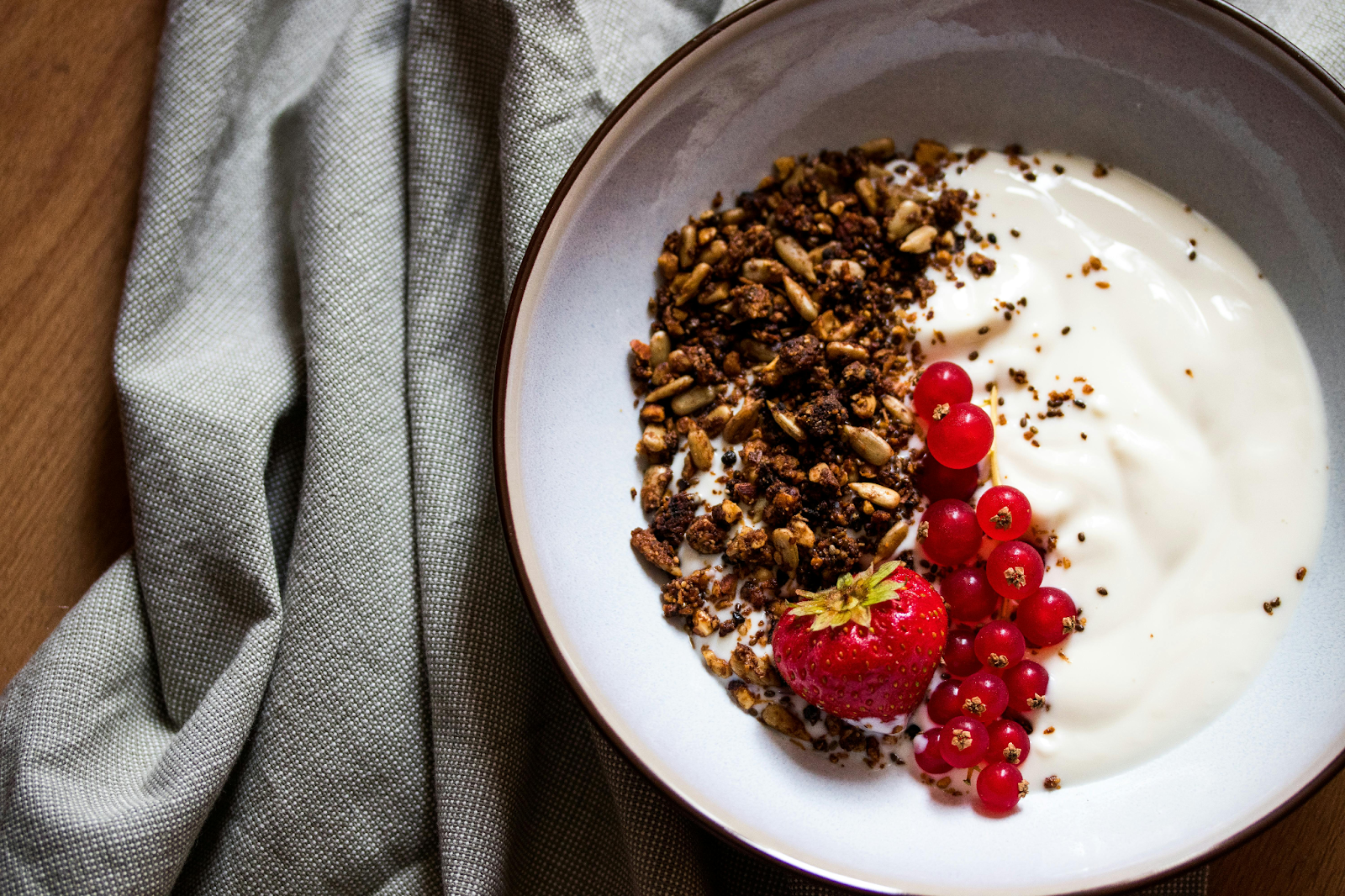
I’ve recently started adding kefir yoghurts because they add a probiotic element. Kefir and gut health are inextricably linked; the fermented bacteria in kefir help improve biodiversity within the microbiome while acting as an anti-inflammatory agent, reducing bloat. It’s particularly helpful to IBS (irritable bowel syndrome) sufferers. Find out where to buy Kefir across the UK.
But if you’re curious about other alternatives, it’s hard to go wrong with a two-minute breakfast smoothie. Combine banana with some soft fruits of your choice, a spoonful of oats and seeds, then fill with milk. It’ll take you no time at all to prep and drink, leaving you more time if you have a longer commute ahead.
Closing Thoughts
If you can start your day healthily, you’re more likely to follow through for the rest of it. Whether you need structure or are just looking to tweak your diet, embracing a gout-healthy start of the day will help you make longer-lasting change and promote a healthier lifestyle.



I have a hard time eating early in the day. I have IBS & chronic pain so my mornings usually start out slow! These tips are helpful and offer suggestions I can easily apply in my daily life. Thanks Susanne!
Hi Annette! Always do what works for you. We are all unique and beautiful, and your body knows what it needs. Also, my friend Cathy Fletcher wrote that:) Suzanne